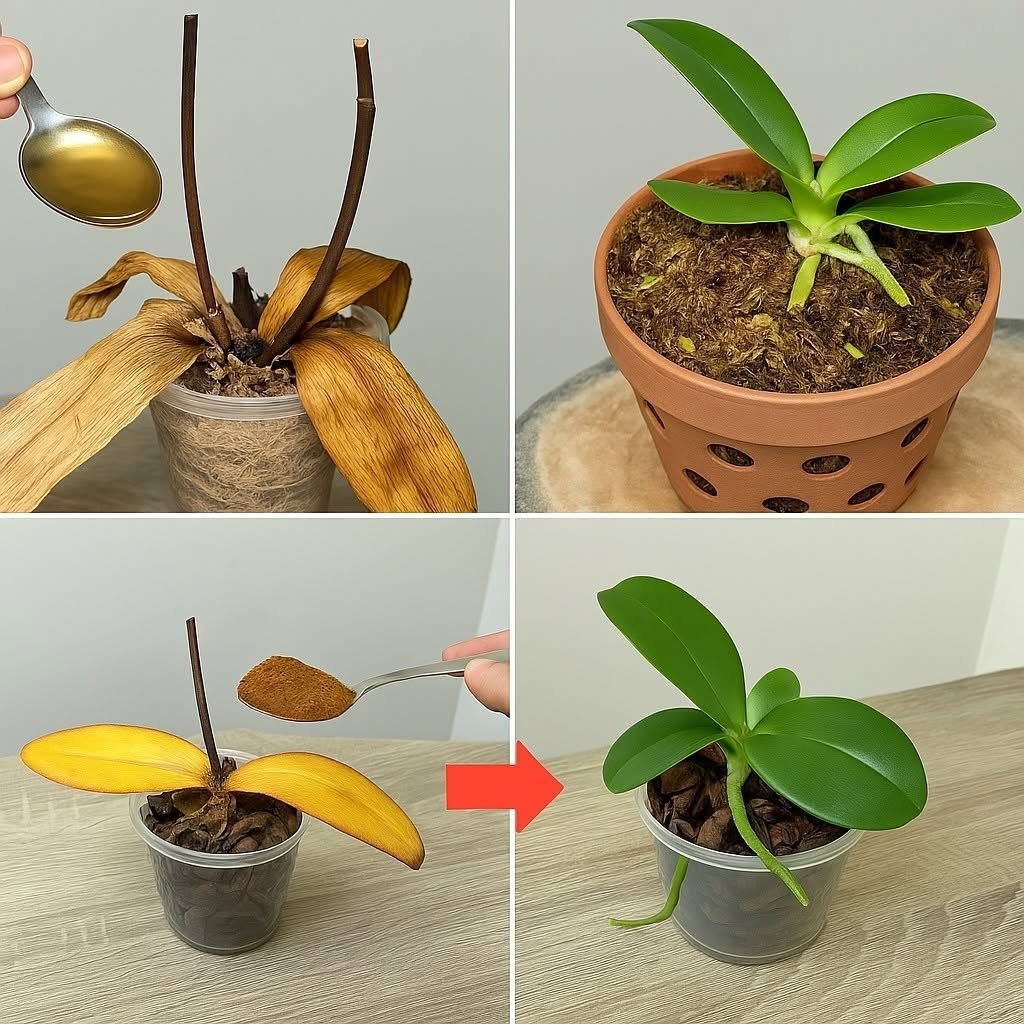
Is your orchid looking weak, with damaged roots and few or no flowers? Before throwing it away, there are a few simple things you can do to give it a better chance of recovering.
You may have seen gardening tips claiming that sprinkling one spoonful of a household ingredient onto dead orchid roots can instantly revive the plant. Unfortunately, truly dead roots cannot simply be brought back to life with a powder or homemade mixture.
However, improving the growing conditions and protecting the remaining healthy roots can make a dramatic difference.
First, Check the Roots
Take the orchid gently out of its pot and examine the roots.
Healthy orchid roots are generally firm. Depending on whether they are wet or dry, they may appear green, silvery, or white.
Dead or badly rotted roots are usually:
Brown or black
Soft or mushy
Hollow or collapsed
Easily pulled apart
Don’t remove healthy, firm roots just because they don’t look bright green.
Remove Rotten Roots Carefully
If you find roots that are clearly rotten, use clean, sterilized scissors to remove them.
Cut away only the damaged portions and keep as many healthy roots as possible.
After trimming, allow the plant to dry appropriately before repotting. Avoid coating large fresh cuts with random kitchen ingredients, as this can sometimes cause additional problems rather than helping the plant.
The “One Spoon” Trick Isn’t Magic
Many viral gardening recipes recommend ingredients such as cinnamon, baking soda, sugar, or other powders for struggling orchids.
Some substances may have limited uses in particular gardening situations, but no household powder can revive roots that are already dead.
The most important step is creating conditions that allow the remaining living roots to function properly.
Give the Orchid the Right Pot
Orchids such as Phalaenopsis generally need excellent drainage and plenty of air around their roots.
A pot with drainage holes is essential. A transparent orchid pot can also make it easier to observe root health and moisture levels.
Avoid placing an orchid in a heavy container that stays wet for long periods.
Use Orchid Potting Mix
Regular garden soil is usually unsuitable for common epiphytic orchids.
A suitable orchid mix often contains materials such as:
Pine bark
Coarse perlite
Sphagnum moss
Other materials that provide air spaces and drainage
The goal is to prevent the roots from sitting in constantly wet, compacted material.
Don’t Overwater
One of the biggest mistakes orchid owners make is watering too frequently.
Orchid roots need both moisture and air. Constantly wet conditions can encourage root rot.
Instead of watering according to a strict calendar, check the plant and its growing medium.
Water thoroughly when appropriate, then allow excess water to drain away completely.
Never leave the orchid sitting in stagnant water.
Give It Bright, Indirect Light
Light is essential if you want an orchid to produce new growth and eventually bloom again.
Place the plant somewhere bright with indirect light.
Strong, direct midday sunlight through a window can scorch the leaves, while very low light may prevent flowering.
A healthy orchid typically needs a good balance between light, warmth, airflow, and appropriate watering.
What About Fertilizer?
Once an orchid has recovered and is actively growing, a suitable orchid fertilizer can provide nutrients that support new leaves, roots, and flowers.
More fertilizer is not better.
Follow the instructions on the product label and avoid repeatedly applying concentrated fertilizer to weak or damaged roots.
A severely stressed orchid should first be given stable growing conditions before being pushed to produce flowers.
Can an Orchid Bloom All Year?
Some orchids can flower for surprisingly long periods and may produce new flower spikes under favorable conditions.
However, no treatment can guarantee that an orchid will bloom continuously throughout the entire year.
Orchids naturally go through periods of growth, flowering, and rest. Providing consistent care is much more reliable than trying a quick viral remedy.
A Simple Orchid Recovery Routine
If your orchid is struggling, try this basic approach:
Step 1: Remove the orchid from its pot and inspect the roots.
Step 2: Cut away roots that are clearly dead or rotten using clean scissors.
Step 3: Repot the plant in a well-draining orchid mix.
Step 4: Place it in bright, indirect light.
Step 5: Water appropriately and allow excess water to drain.
Step 6: Maintain reasonable humidity and good airflow.
Step 7: Once new growth appears, resume a gentle fertilizing routine suitable for orchids.
The Bottom Line
There is no magic spoonful that can bring genuinely dead orchid roots back to life.
But don’t give up on an orchid simply because some of its roots have died. If healthy roots remain, the plant may still have a good chance of producing new growth.
Instead of relying on a viral kitchen remedy, focus on the fundamentals: healthy roots, proper drainage, appropriate watering, bright indirect light, airflow, and patience.
With the right conditions, a struggling orchid can sometimes make an impressive recovery and reward you with beautiful flowers again.