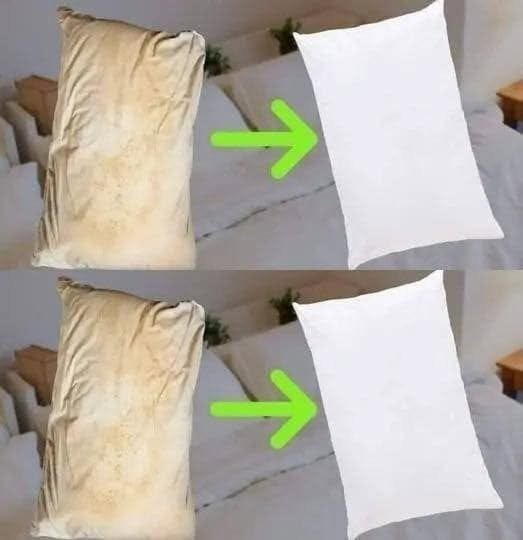
Over time, bed pillows can become yellow, stained, and less fresh because they absorb sweat, body oils, and moisture while we sleep. The good news is that many washable pillows can be refreshed at home with a simple cleaning routine.
Before washing any pillow, check the care label. Some pillows—especially memory foam and latex pillows—should not be placed in a washing machine.
What You’ll Need
Mild laundry detergent
Washing soda or baking soda
White vinegar
Clean towels
A washing machine, if the pillow is machine-washable
Dryer or a well-ventilated place for air-drying
Step 1: Check the Pillow
Remove the pillowcase and protective cover. Look for stains, tears, or damaged seams.
Read the manufacturer’s instructions carefully. If the label says the pillow is not washable, don’t soak or machine-wash it. Instead, follow the recommended spot-cleaning method.
Step 2: Treat Visible Stains
For washable pillows, gently treat noticeable yellow or stained areas before washing.
Apply a small amount of mild detergent diluted with water and gently work it into the fabric. Avoid aggressively scrubbing the pillow, as this can damage the filling or fabric.
Step 3: Wash Carefully
Place washable pillows in the washing machine according to the manufacturer’s instructions. Washing two pillows together can help keep the load balanced.
Use a gentle cycle and an appropriate amount of mild detergent. Avoid using excessive detergent, because soap residue can remain inside the pillow.
For an extra-fresh rinse, some people add a small amount of white vinegar to the appropriate compartment of the washing machine. Never mix vinegar with chlorine bleach, as this can produce dangerous fumes.
Step 4: Rinse Thoroughly
A complete rinse is important. Any detergent left inside the pillow can contribute to residue and odors.
If the pillow still feels soapy after the normal cycle, consider running an additional rinse cycle if the care instructions allow it.
Step 5: Dry Completely
Drying is one of the most important parts of cleaning a pillow.
Follow the care label for the appropriate drying method. If machine drying is permitted, use the recommended temperature and make sure the pillow becomes completely dry.
If air-drying is recommended, place the pillow somewhere clean and well ventilated and turn it periodically.
Never put a pillow away while it is still damp. Moisture trapped inside can encourage unpleasant odors and microbial growth.
How Often Should Pillows Be Cleaned?
Pillowcases should generally be washed much more frequently than the pillows themselves. Pillows can usually be cleaned according to their care instructions and condition, while protective pillow covers can provide an additional layer of protection.
If a pillow has a persistent odor, visible mold, severe staining, or damaged filling that cannot be cleaned safely, replacing it may be a better option.
A Fresh Pillow Makes a Difference
Cleaning washable pillows can help remove accumulated sweat, oils, stains, and odors, making the bed feel noticeably fresher. The key is to follow the manufacturer’s instructions, avoid harsh combinations of cleaning chemicals, and make sure the pillow is completely dry before using it again.
A clean pillowcase, a washable pillow protector, and regular laundering can also help keep pillows fresher for longer.